Posts

Remote MCP Server to access an Oracle database in Claude on iOS

Image
Think of MCP ( Model Context Protocol ) as the universal adapter for AI assistants. Just like USB-C promised to connect any device to any port, MCP lets AI models connect to virtually any data source, application, or service through a standardized protocol. Whether it's a company database, a cloud service, or a local file system, MCP bridges the gap between AI and the tools you use. The buzz around MCP isn't just hype—it's solving a real problem. Until recently, getting AI to work with your specific data and workflows meant custom integrations, API wrangling, and a lot of developer headaches. MCP changes that by creating a common 'language' that AI models can use to communicate with external systems securely and efficiently. Although MCP is relatively new (created by Anthropic in November 2024), all major players are backing the protocol.  With developers rapidly building MCP servers for everything from databases to development tools, we're witnessing the birt...

Oracle Select AI and APEX

Image
Yes, yes, I know, it's my first blog post in 10 years.  A s Oracle is doing some really interesting stuff with AI I thought I'd break cover and do a post showing a little something I've been working on. It's probably not escaped your attention that Oracle recently announced the release of Oracle Database 23ai (on OCI/Azure now but not yet on-prem), with a host of new features to allow developers to incorporate generative AI (genAI) into their work which will ultimately help end users be more productive. One AI feature that was released in 2023 prior to this announcement is Select AI , or Autonomous Database Select AI to give it the proper title.   This is a feature of the Autonomous Database that enables data to be queried using natural language, generating (ANSI) SQL from genAI large language models (LLMs) such as  OpenAI,  Cohere and Azure OpenAI.   There's a great  demo put together by the Oracle APEX team demonstrating Select AI working with...

UKOUG Tech14 - APEX Highlights

Image
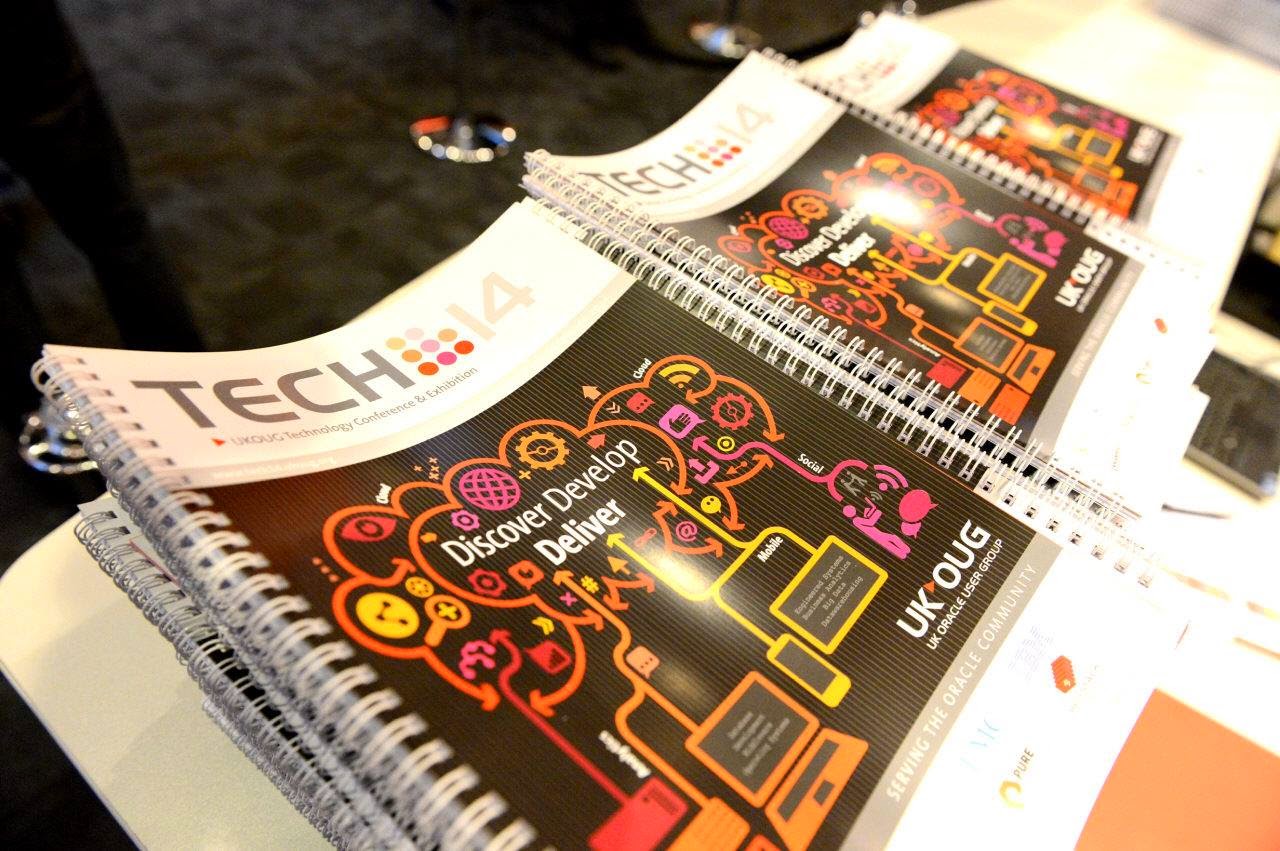
Last week I spent 4 days at the annual UK Oracle User Group conference, this time around called  Tech14 .  It was my first  UKOUG  conference in a number of years and I set out with the intention of treating it like an all you can eat buffet of APEX presentations and workshops. So, what were the APEX highlights of Tech14? Well, I have to start with the presentations given by  Joel Kallman ,  David Peake  and  Shakeeb Rahman .  They gave a number of talks over all 4 days, a fair few of these covered various features of APEX 5.  I'm really impressed with the new Page Designer which looks even more like a traditional IDE and will help convince Forms (and ADF,  .Net, etc) developers of just how serious a development tool APEX really is.  Oracle consider this to be a 'game changer' for APEX and it's hard to disagree. Shakeeb gave a number of talks centred on the new Universal Theme within APEX 5.  This is a new centra...

Fun with Bubbles - Part 2

Image
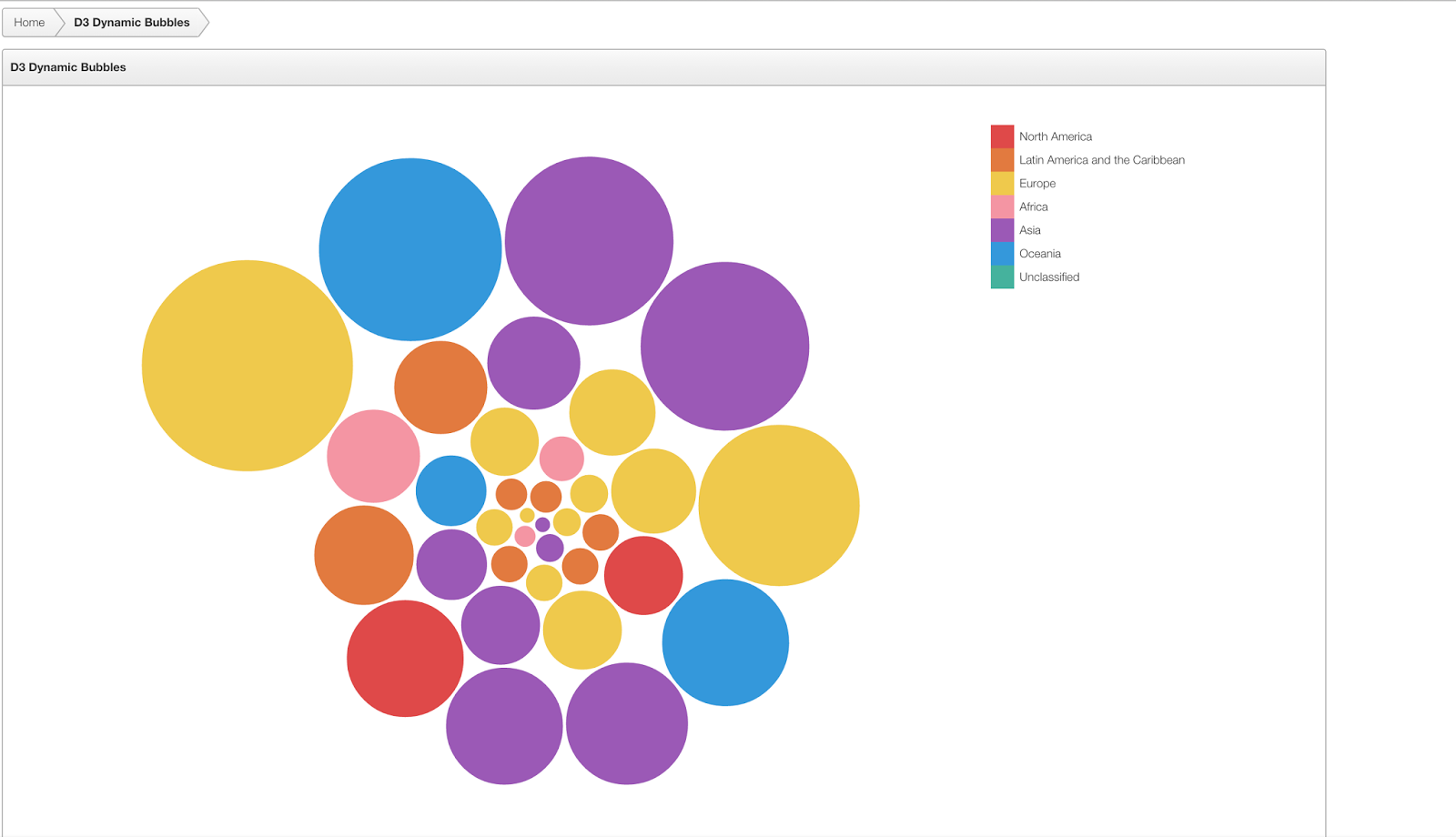
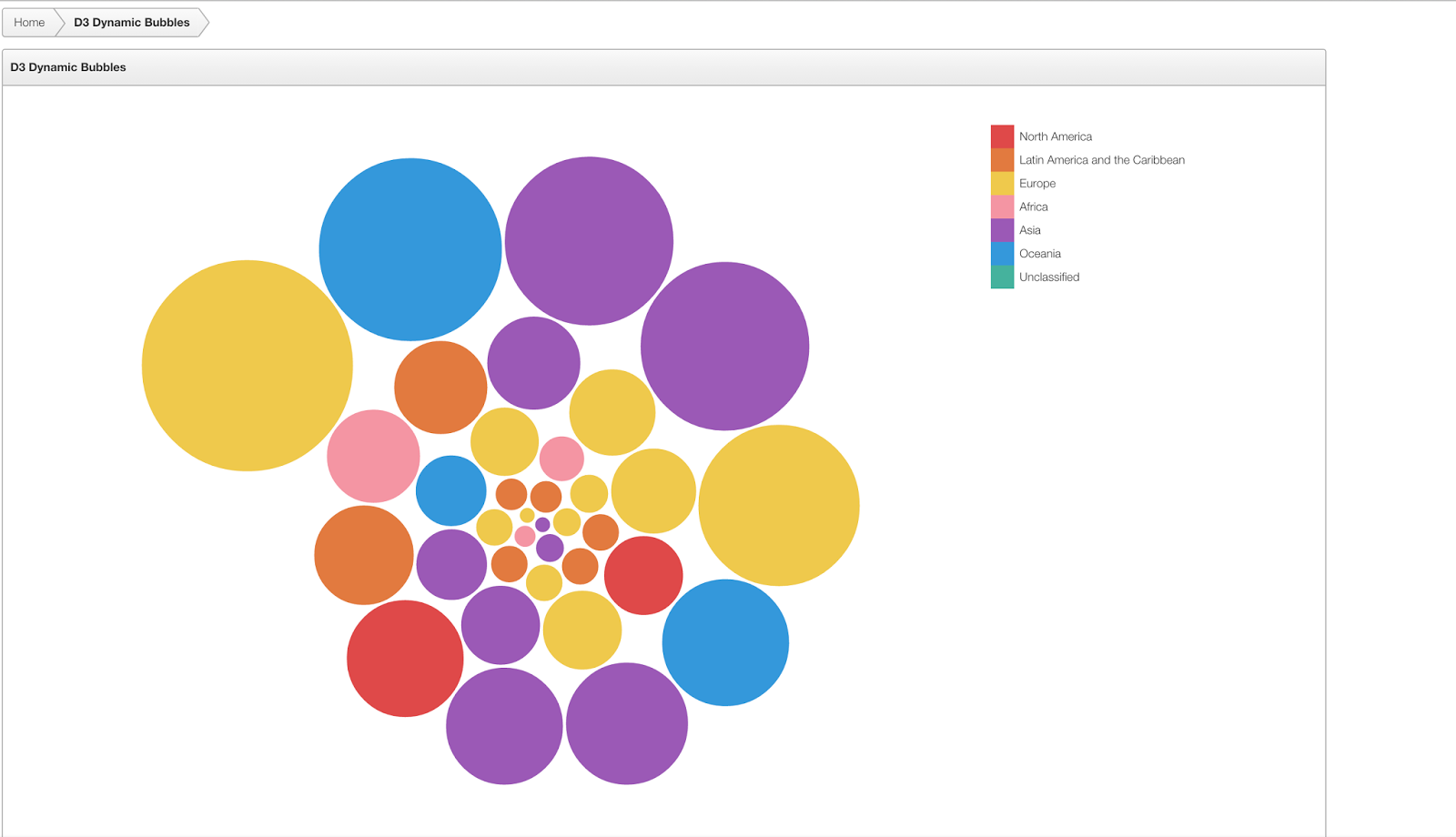
In my previous  post a couple of days back, I demonstrated a simple APEX demo with D3 pulling dynamic data from the database in the form of a bubble chart.  I promised to share the code so here it is. It's really quite simple.  In short, i've created a table, D3_COUNTRIES, which contains 10 sets of rows each with a country code, name and a value.  The Javascript code on the page has an interval that runs every 2 seconds, and each time calls an Ajax callback process to get another set of country data.  The code then uses D3 to create a bubble chart for that data, using a nice transition between each set. First of all create the table and upload the data.  Here's the DDL to create the D3_COUNTRIES table. CREATE TABLE "D3_COUNTRIES" ( "ID" NUMBER(10,0), "COUNTRY_CODE" VARCHAR2(2) NOT NULL ENABLE, "COUNTRY_NAME" VARCHAR2(100) NOT NULL ENABLE, "CREATED_DATE" DATE, ...

Fun with Bubbles!

Image
I'm on a train up to Liverpool for the UK Oracle User Group Tech 14 conference, and decided it's about time for a post showing something I've been working on.  I don't post often these days, which I blame on work and family commitments, but is probably just down to pure laziness.  Anyhow, I'm feeling in the mood so I'll just get on with it in case the desire to catch some zzz's becomes overwhelming.  Also it takes my mind of the bad coffee served up on the train. So, I've been getting into  D3  a little, which if you don't already know is a JavaScript library for manipulating data to create interactive graphs and charts.  Some of the stuff people are creating using D3 is amazing, including this dynamic bubble chart example.  I thought I would use this example as the basis for creating a bubble chart in Apex, that dynamically updates with some cool transitions, using data from the database rather than the real time API in the example. The demo ca...

Oracle 12c Database finally lands.....

It's finally here, for Linux & Solaris at least: Oracle 12c Database

Mapping The World's Energy On The Move...

Here's a link to a nice write up in Forbes on something that I was involved with over the last few years: Thomson Reuters Eikon - Mapping The World's Energy On The Move

Oracle Locator and Spatial

If you already use Oracle Spatial or Locator then you probably already know Simon Greeners SpatialDB Advisor blog, but if not then I can recommend it as an invaluable source of Spatial nuggets.  Whether you are just starting out with Spatial or have some level of experience with it you will find something there which will knock your socks off! When I was helping a client with creating a geo-spatial database I found it confusing with regard to what is included as part of the Locator licence ('free' with Enterprise Edition) instead of the additional fee option of Spatial.  One of Simons posts  really makes it clear what is and isn't included with Locator, and thus I was able to ascertain that the client only really needed the functionality available within Locator, resulting in a considerable saving on licence fees for the Spatial extension.